
August 31, 2026, 10:09 AM
What Is an Online Business Marketplace and How Does It Work Worldwide?
Somewhere right now, a bakery owner in Lisbon and an investor in Singapore are looking at the exact same listing, on the exact same platform, without ever meeting in person. That's the quiet power behind an online business marketplace worldwide, a system that's rewritten how buying and selling companies actually happens. If you've ever wondered how a deal crosses borders this smoothly, the mechanics behind it are more fascinating than most people realize.
Breaking Down What an Online Business Marketplace Worldwide Actually Means
A Digital Meeting Point for Buyers and Sellers
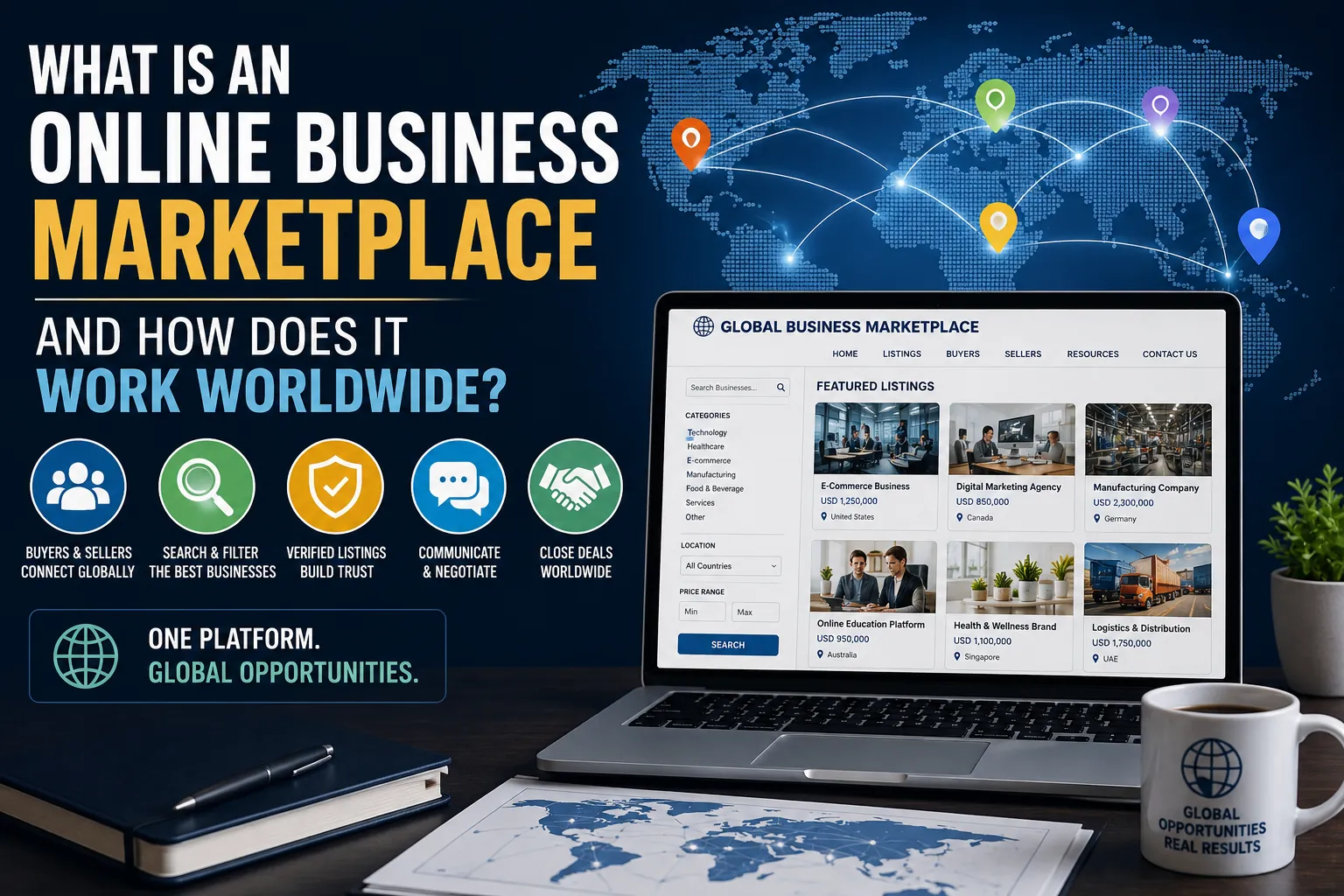
At its core, this type of platform connects business owners looking to sell with buyers actively searching for opportunities, all through one centralized digital space. Instead of relying on local brokers or word-of-mouth, both sides browse, compare, and communicate directly within a structured online environment.
Why "Worldwide" Changes the Entire Equation
Traditional business sales stayed geographically limited, a seller in one city reaching only nearby buyers. Global platforms remove that boundary entirely, letting a seller in Dubai connect with a buyer in Toronto just as easily as someone across town, expanding opportunity dramatically.
How These Platforms Actually Function Behind the Scenes
Listing Creation Sets Everything in Motion
Sellers create detailed listings covering financials, operations, and growth potential, essentially a digital storefront for their business. Strong listings include verified revenue data and clear operational details, since vague listings rarely attract serious buyer interest in a competitive online environment.
Verification Builds the Trust Buyers Need
Reputable platforms verify seller claims before listings go live, checking financial documents and business legitimacy. This verification step matters enormously, since buyers investing significant money need confidence that numbers presented online actually reflect real, functioning operations rather than exaggerated projections.
Search and Filtering Narrow Down Options Fast
Buyers filter listings by industry, location, revenue range, or asking price, narrowing thousands of options into a manageable shortlist within minutes. This filtering function saves enormous time compared to manually researching individual businesses through scattered, disconnected sources.
Communication Tools Keep Negotiations Moving
Built-in messaging systems let interested buyers contact sellers directly, ask questions, and request additional documentation without leaving the platform. This streamlined communication reduces the back-and-forth delays that traditionally slowed down cross-border business negotiations significantly.
The Global Mechanics That Make Cross-Border Deals Possible
Currency and Valuation Standardization
Platforms often standardize pricing displays across currencies, helping international buyers compare opportunities without manually converting figures. This small but crucial feature removes friction that once made comparing a UAE business against a European one confusing and time-consuming.
Connecting Sellers With Serious Capital
Sellers listing internationally often aim to find global investors who bring not just capital but market expertise from other regions. This cross-border capital flow benefits both sides, giving investors fresh opportunities while sellers gain access to buyers their local market couldn't offer.
Legal and Regulatory Awareness Built Into the Process
Good marketplaces guide cross-border regulations, tax implications, and transfer requirements specific to each region. Buyers pursuing a running business for sale in Dubai, for instance, need region-specific knowledge that generic advice simply can't cover accurately.
Why Sellers and Buyers Both Benefit From Going Global
Sellers Gain Access to a Far Larger Buyer Pool
Instead of limiting exposure to local networks, sellers reach buyers across continents actively searching for exactly their type of business. This wider pool often leads to faster sales and more competitive offers than purely local marketing could generate.
Buyers Discover Opportunities They'd Never Find Locally
Buyers gain access to industries, business models, and regional advantages unavailable in their home market. A buyer wanting a specific niche business might find nothing locally, yet discover several strong matches once searching internationally through a dedicated platform.
Bringing the Bigger Picture Into Focus
Business buying and selling has moved well beyond local classifieds and regional brokers. An online business marketplace worldwide now connects serious buyers and sellers across continents, backed by verification, structured listings, and tools built specifically for cross-border deals. Whether you're selling or searching, understanding how these platforms operate puts you in a far stronger position before you make your next move.
Frequently Asked Questions
Are online business marketplaces safe for large transactions?
Reputable platforms verify listings and provide secure communication channels, though buyers should still conduct independent due diligence before finalizing any significant purchase, regardless of platform verification standards.
Can sellers list businesses in multiple countries simultaneously?
Yes, many platforms allow sellers to target multiple regions within one listing, expanding visibility across different buyer pools without creating separate accounts or duplicate listings for each market.
How do currency differences affect international business deals?
Platforms often display standardized pricing or conversion tools, helping buyers compare listings fairly across currencies, though final negotiations typically still require clarifying settlement currency before closing.
Do these marketplaces handle legal paperwork for buyers?
Most provide guidance rather than full legal service, connecting buyers with regional experts when needed. Buyers should still engage independent legal counsel familiar with local transfer regulations.
What industries perform best on global marketplaces?
Scalable, location-flexible businesses like e-commerce or digital services often attract strong international interest, though local service businesses also find buyers, particularly investors relocating or expanding regionally.